
State of the Namibian Economy 2026
IPPR research associate Robin Sherbourne unpacked the State of the Namibian Economy in his annual presentation delivered on 28 July 2026 This comprehensive overview covered everything from oil and gas through to diamonds.
Political Scenarios To 2030
In this presentation, IPPR Executive Director Graham Hopwood develops three scenarios for Namibia’s political and governance trajectory to 2030. Rather than predicting the future, the scenarios explore plausible pathways based on current political, economic and institutional trends, with the aim of stimulating debate and identifying the reforms needed to strengthen governance, accountability and inclusive development. […]
Namibia-EU Trade Relations
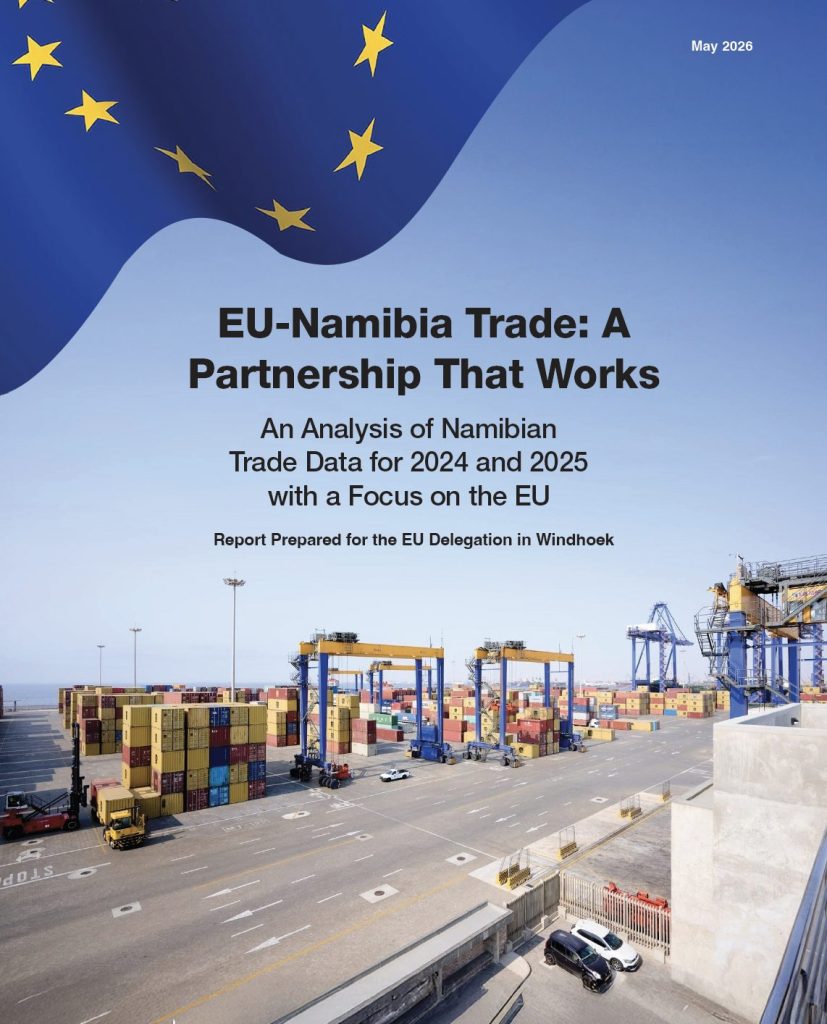
This report analyses Namibia’s trade performance in 2024 and 2025, with a particular focus on the country’s economic relationship with the European Union. Drawing on the latest Namibia Statistics Agency trade data, it examines export and import trends, the composition of trade, key trading partners and the contribution of trade with the EU to employment […]
Danger of Cybercrime Overreach
This briefing paper examines the draft Cybercrime Bill 2026 from a constitutional and human rights perspective. The paper argues that while effective cybercrime legislation is essential, several provisions in the current draft are so broadly framed that they could undermine freedom of expression, media freedom, privacy and access to information. The paper identifies key areas […]
Namibia QER Quarter 2 2026
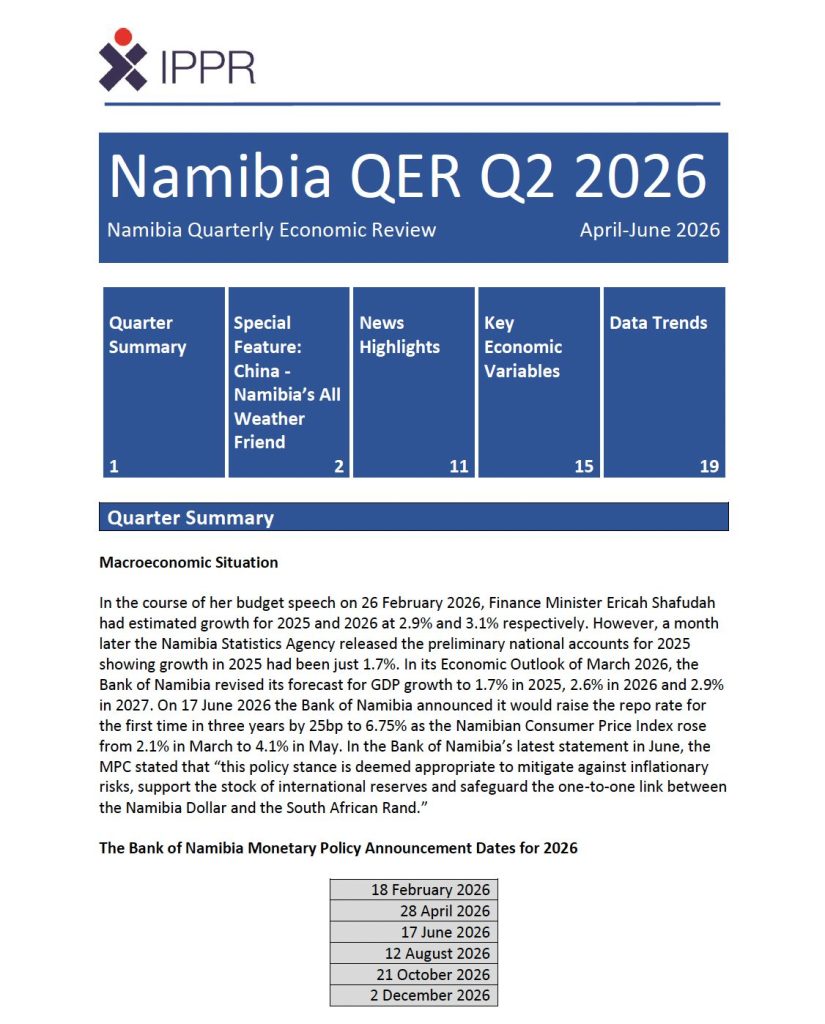
This Namibia Quarterly Economic Review (Q2 2026) reviews key economic developments from April to June 2026 and includes a special feature examining China’s expanding role in Namibia’s economy – from mining and energy to infrastructure, telecommunications and water. Download the report for analysis of the latest economic trends, policy developments and investment issues.
GERP – A Critical Overview & Assessment
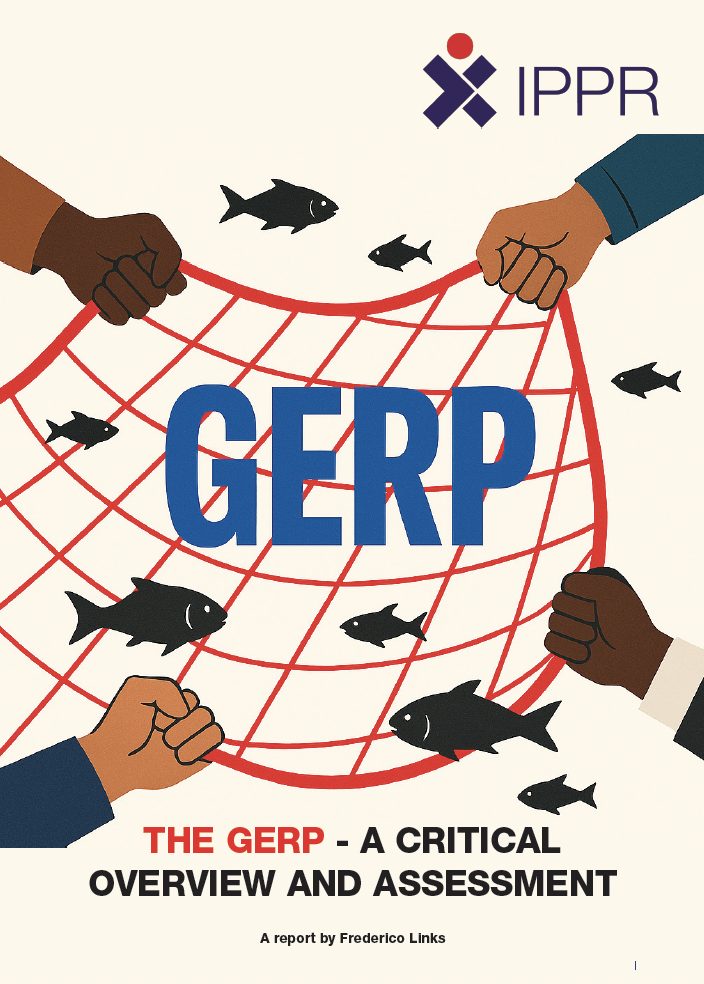
The Government Employment Redress Programme (GERP) was introduced to restore jobs and livelihoods following the Fishrot scandal, but has been beset by controversy since its inception. This IPPR briefing paper examines how the programme has been implemented, assesses its impact on affected fisheries workers, and identifies key governance shortcomings. The paper argues that the experience […]
Scandal-Plagued Procurement
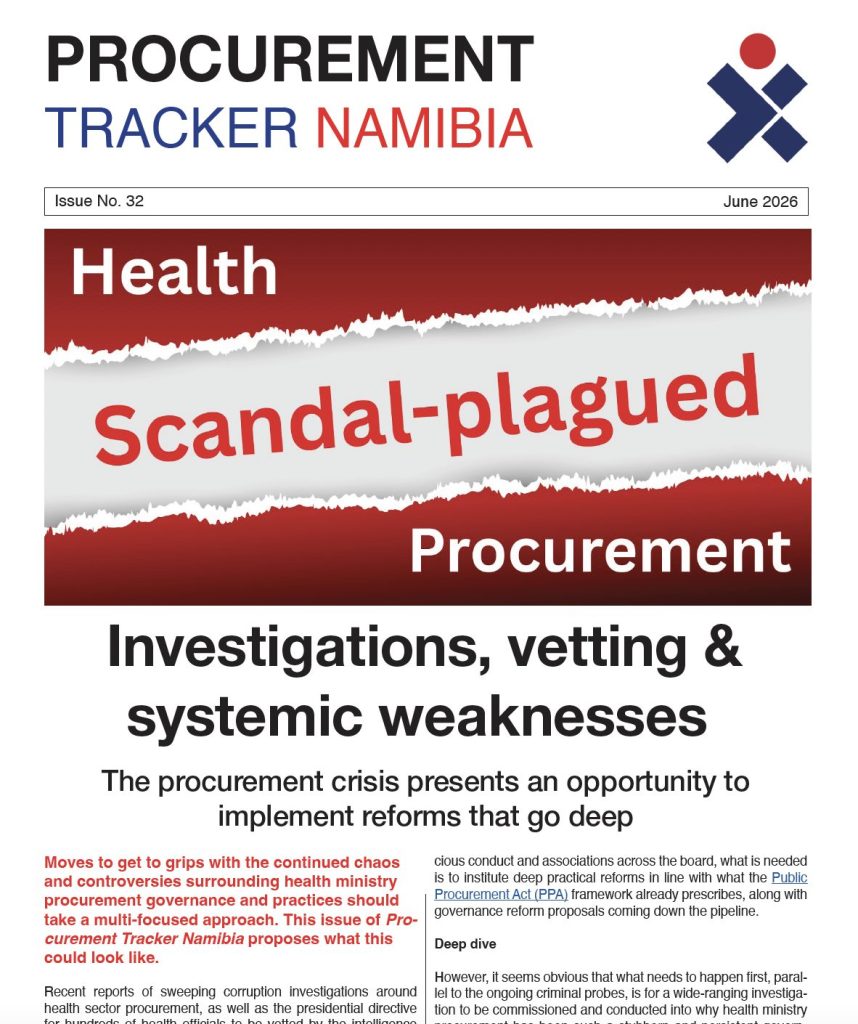
For years, Namibia’s health sector has been dogged by procurement controversies, irregularities, investigations and recurring allegations of corruption. Yet despite repeated scandals, many of the underlying weaknesses in procurement systems, oversight mechanisms and supplier vetting processes remain unresolved. The result is a cycle in which the same problems continue to reappear, often at significant cost […]
Not Yet Uhuru

The briefing paper examines the tensions between constitutional rights, court victories, legislative backlash and social attitudes shaping the lived realities of LGBT Namibians – and asks how far Namibia still has to go in building a truly inclusive democracy.
Green Hydrogen – Questions, Perspectives and Dialogues
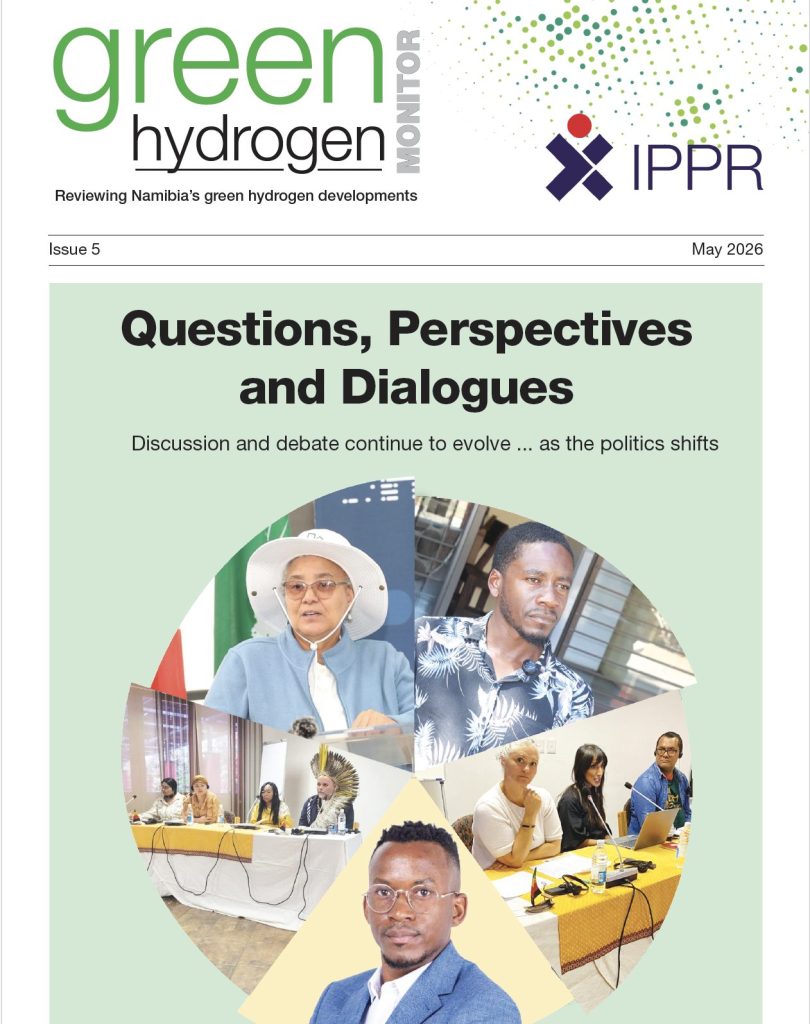
This edition of the Green Hydrogen Monitor examines the evolving debates around the green hydrogen sector – including industrialisation, finance, community engagement, environmental concerns, skills development, and the shifting political landscape around ‘green’ energy.
Namibia QER Quarter 1 2026
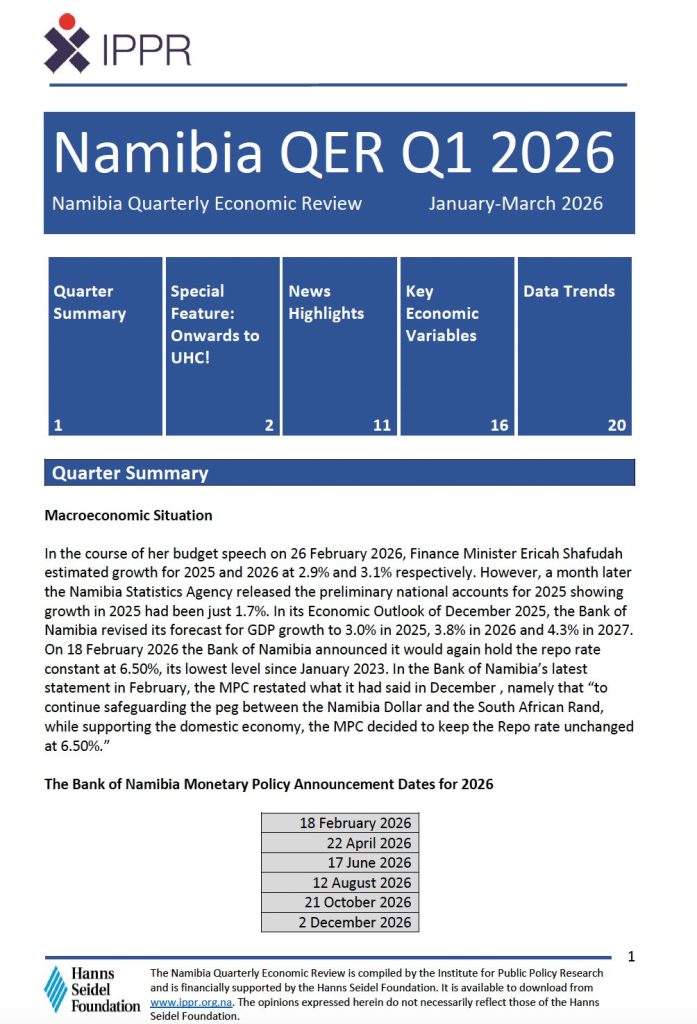
This Quarterly Economic Review (Q1 2026) examines key economic developments between January and March 2026, including trends in growth, inflation, interest rates and investment. The special feature in this QER focuses on Namibia’s health system which remains deeply unequal, with three parallel financing models delivering vastly different levels of care. While government’s push for Universal Health Coverage […]