
Namibia-EU Trade Relations
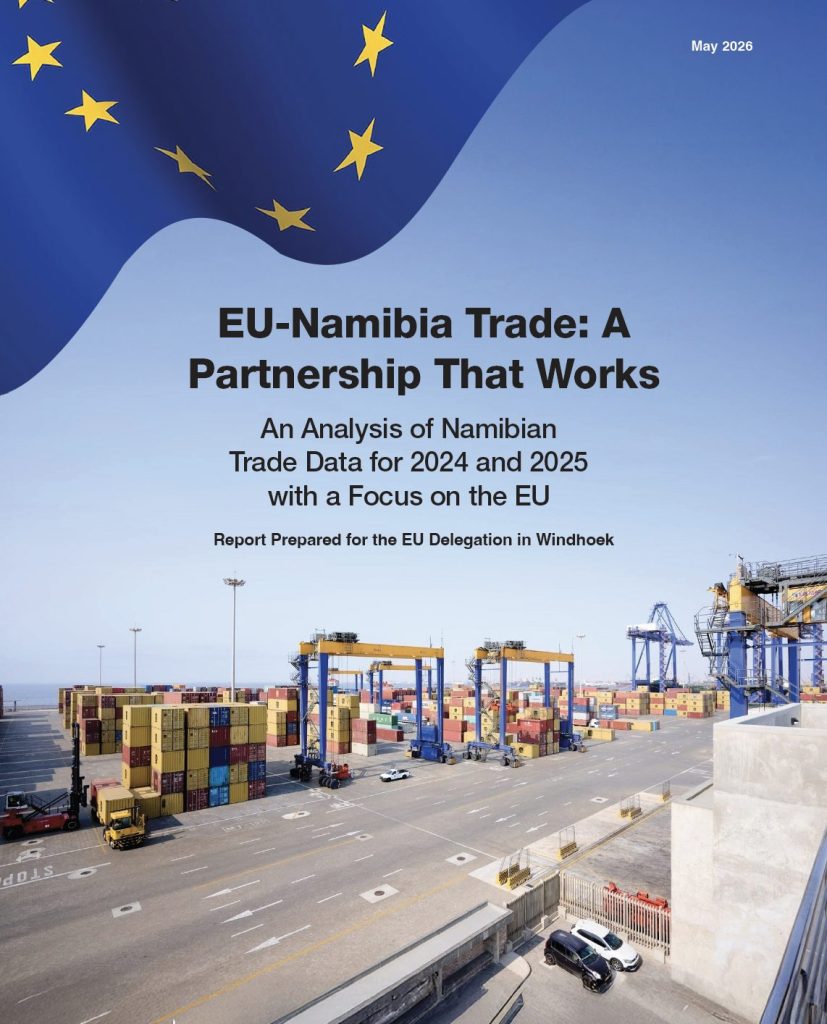
This report analyses Namibia’s trade performance in 2024 and 2025, with a particular focus on the country’s economic relationship with the European Union. Drawing on the latest Namibia Statistics Agency trade data, it examines export and import trends, the composition of trade, key trading partners and the contribution of trade with the EU to employment […]
Danger of Cybercrime Overreach
This briefing paper examines the draft Cybercrime Bill 2026 from a constitutional and human rights perspective. The paper argues that while effective cybercrime legislation is essential, several provisions in the current draft are so broadly framed that they could undermine freedom of expression, media freedom, privacy and access to information. The paper identifies key areas […]
GERP – A Critical Overview & Assessment
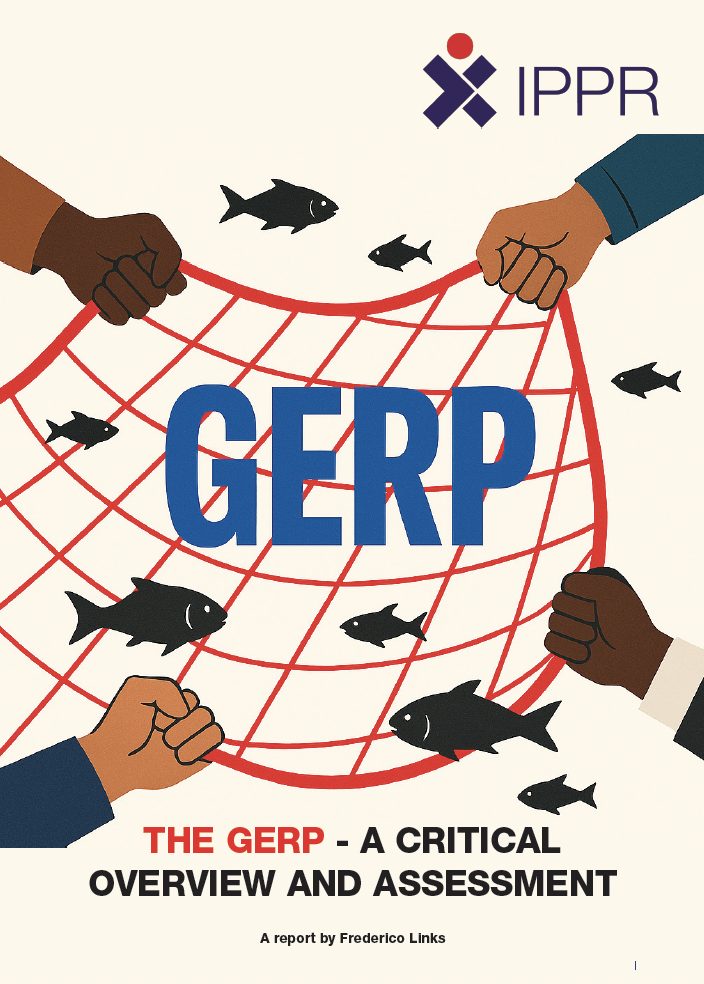
The Government Employment Redress Programme (GERP) was introduced to restore jobs and livelihoods following the Fishrot scandal, but has been beset by controversy since its inception. This IPPR briefing paper examines how the programme has been implemented, assesses its impact on affected fisheries workers, and identifies key governance shortcomings. The paper argues that the experience […]
Not Yet Uhuru
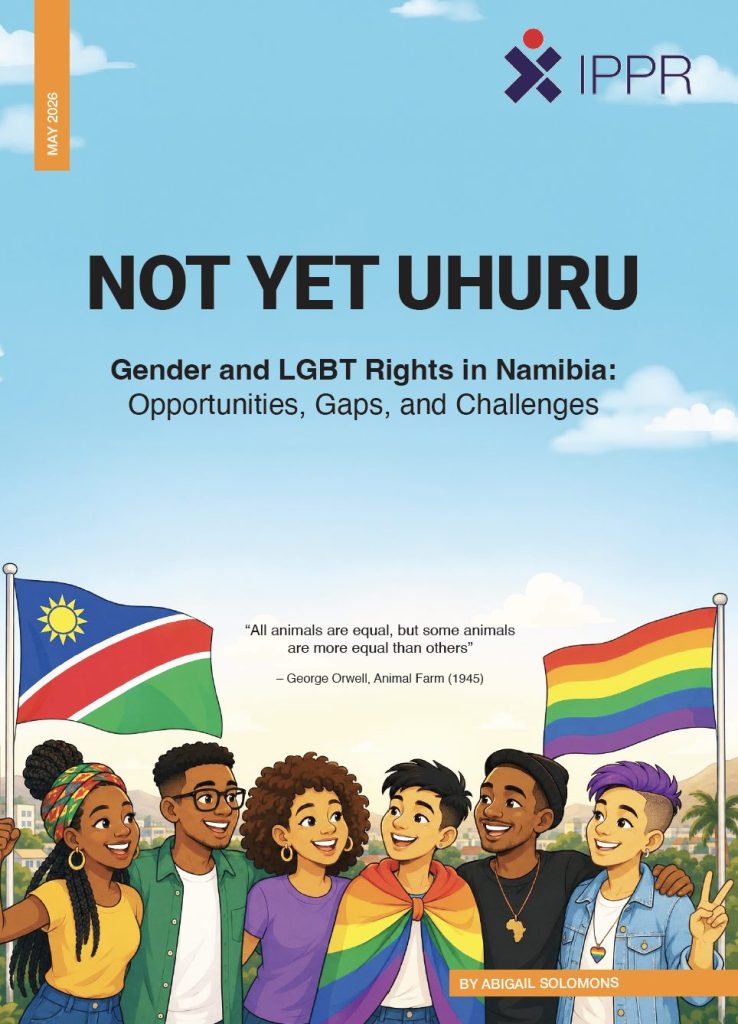
The briefing paper examines the tensions between constitutional rights, court victories, legislative backlash and social attitudes shaping the lived realities of LGBT Namibians – and asks how far Namibia still has to go in building a truly inclusive democracy.
The Budget – Treading A Fine Line
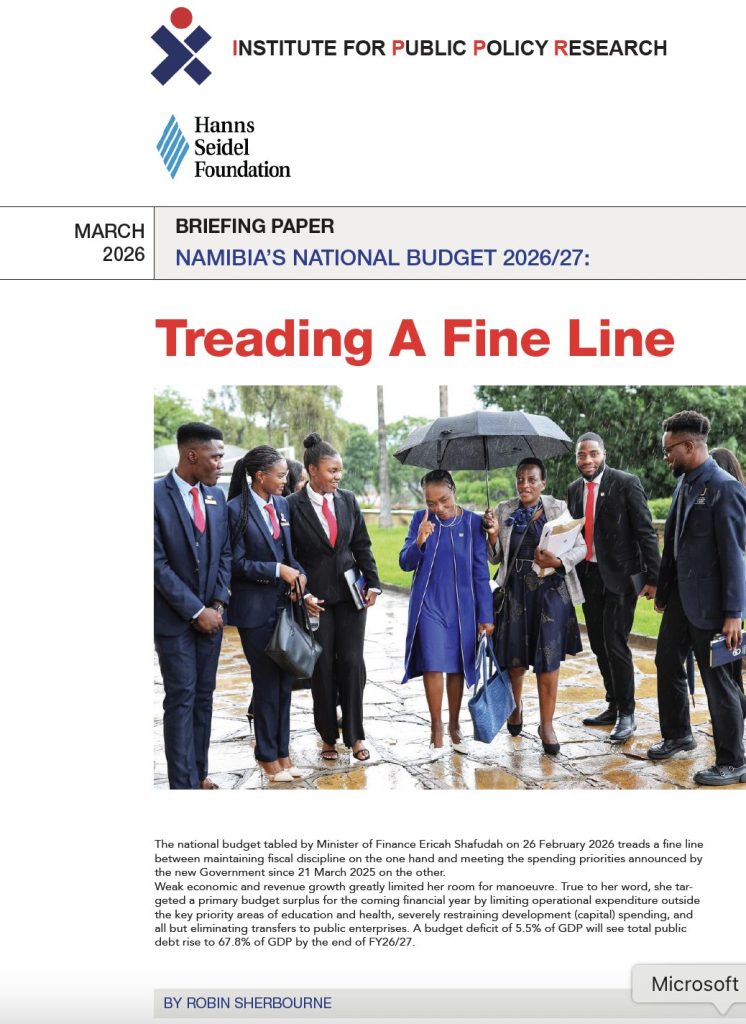
This IPPR briefing paper by economist Robin Sherbourne analyses Namibia’s 2026/27 national budget, tabled by Finance Minister Ericah Shafudah in February 2026. The paper examines the government’s attempt to balance fiscal discipline with new spending priorities at a time of weak economic and revenue growth, rising debt pressures, and constrained development spending.
Economic Scenarios for Namibia
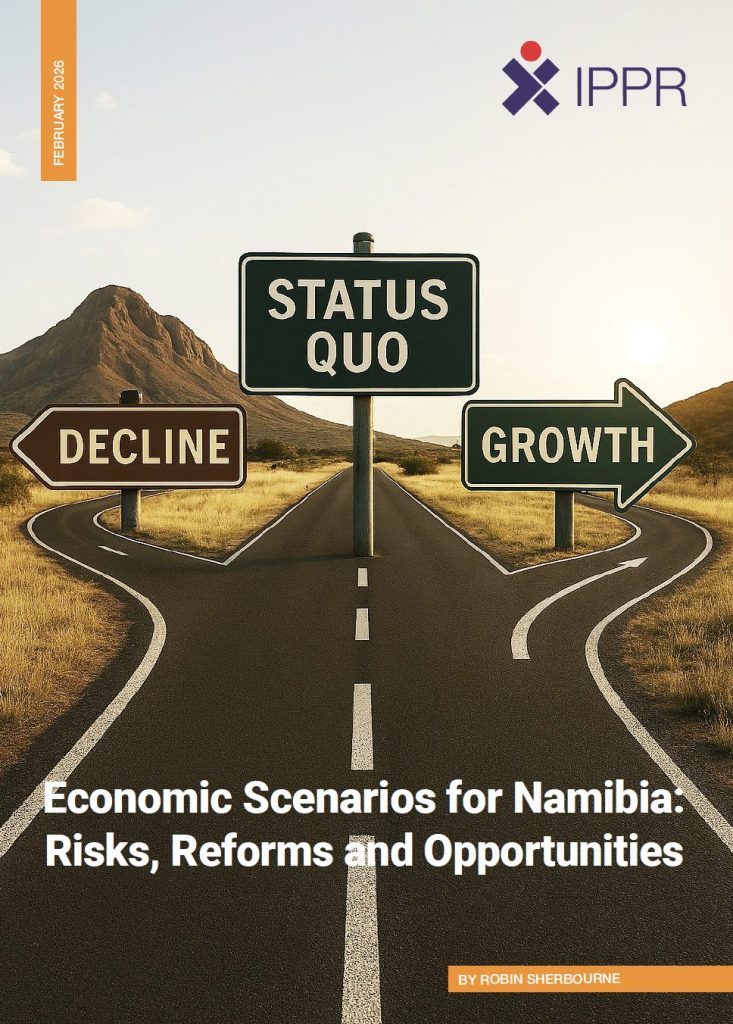
This briefing paper examines Namibia’s potential economic pathways to 2030 by outlining contrasting pessimistic and optimistic scenarios across key sectors. The paper assesses demographic pressures, political dynamics, monetary and fiscal policy, and the international environment to highlight the risks and opportunities that will shape the country’s development trajectory. It provides a structured framework for understanding […]
Closing the Gaps – Political Party Finance
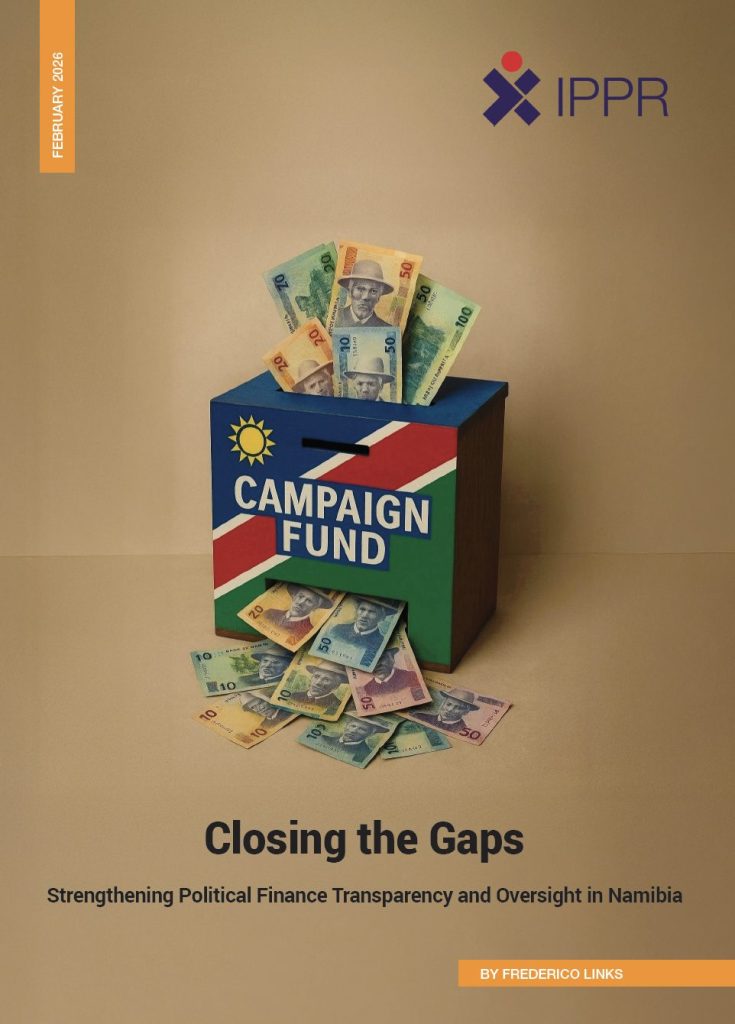
The briefing paper examines the new international standards on political finance transparency adopted at the 11th Conference of States Parties (CoSP11) to the United Nations Convention Against Corruption (UNCAC). The report’s author Frederico Links argues that Namibia’s political finance system continues to face significant challenges due to weaknesses in legislation, enforcement and compliance. The new […]
Will We Have The Skills?
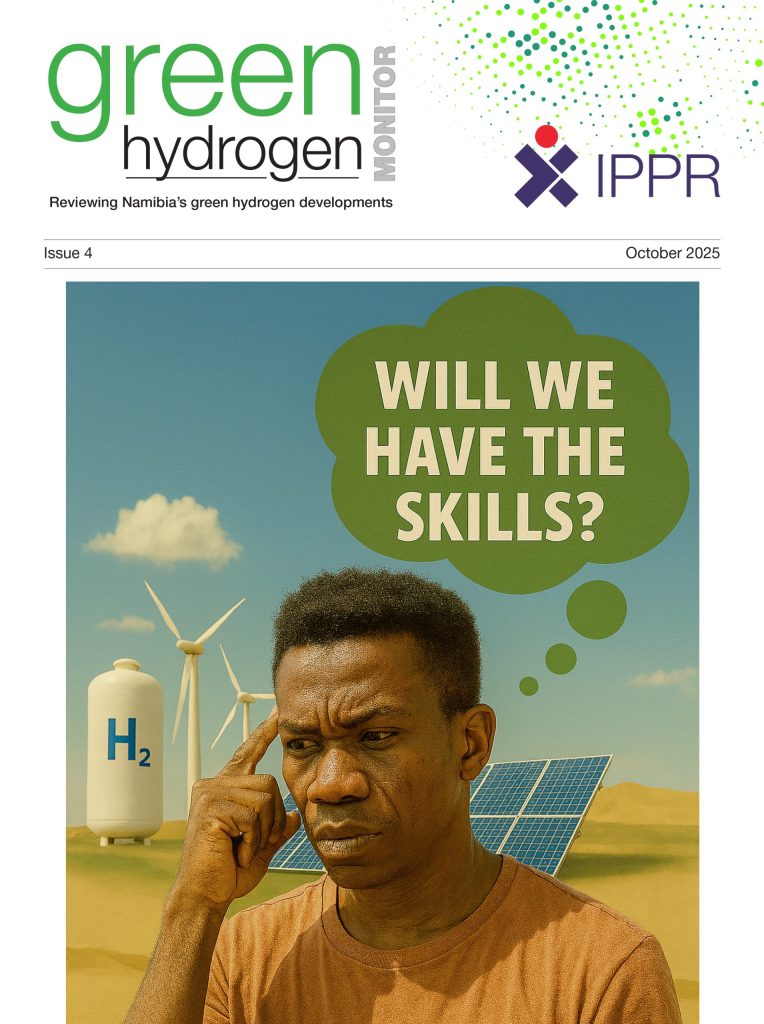
This fourth edition of the Green Hydrogen Monitor spotlights a comprehensive assessment which concludes that while the foundational skills exist, a strategic, country-wide effort is required to bridge the gap between conventional trades and the sophisticated demands of the green hydrogen value chain.
Inside The Numbers Of Namibia’s 2024 Vote
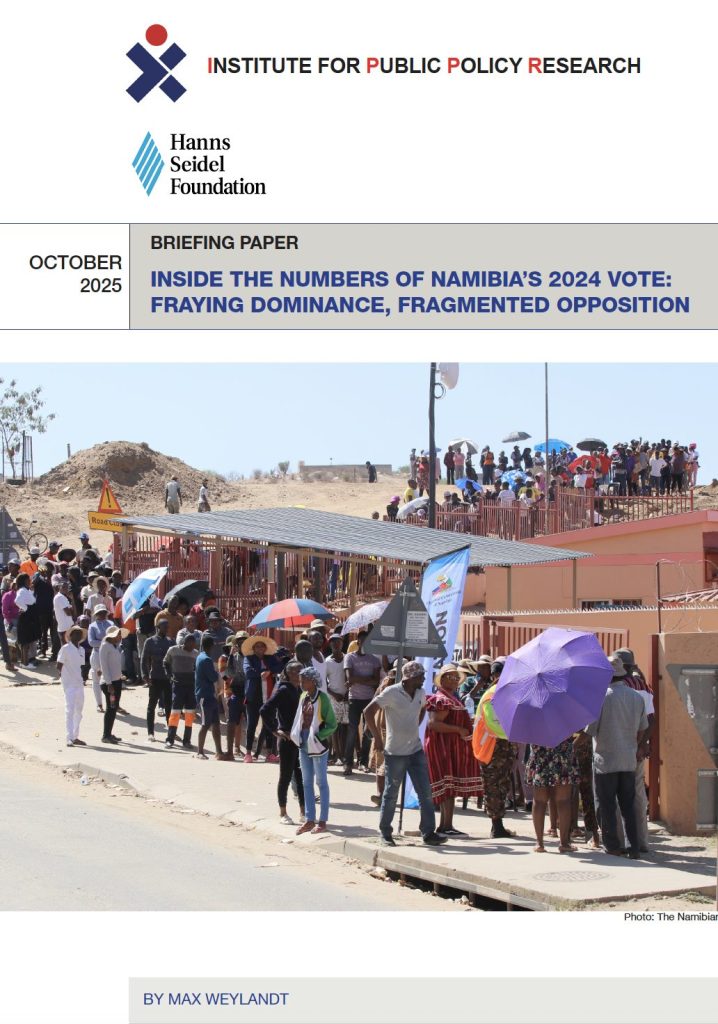
This IPPR briefing paper dissects the 2024 National Assembly results and shows Swapo’s support sliding to a little above the 50% mark after peaking at 80% in 2014. Using constituency-level data, it traces three big shifts: urban centres turning into battlegrounds, the South consolidating as opposition territory, and cracks emerging in the party’s northern heartlands. […]
Countering Election Disinformation

An overview of mis- and disinformation that affected Namibia’s 2024 national elections. The report is accompanied by five issue-specific bulletins that examine: