
Eiseb’s Big Task
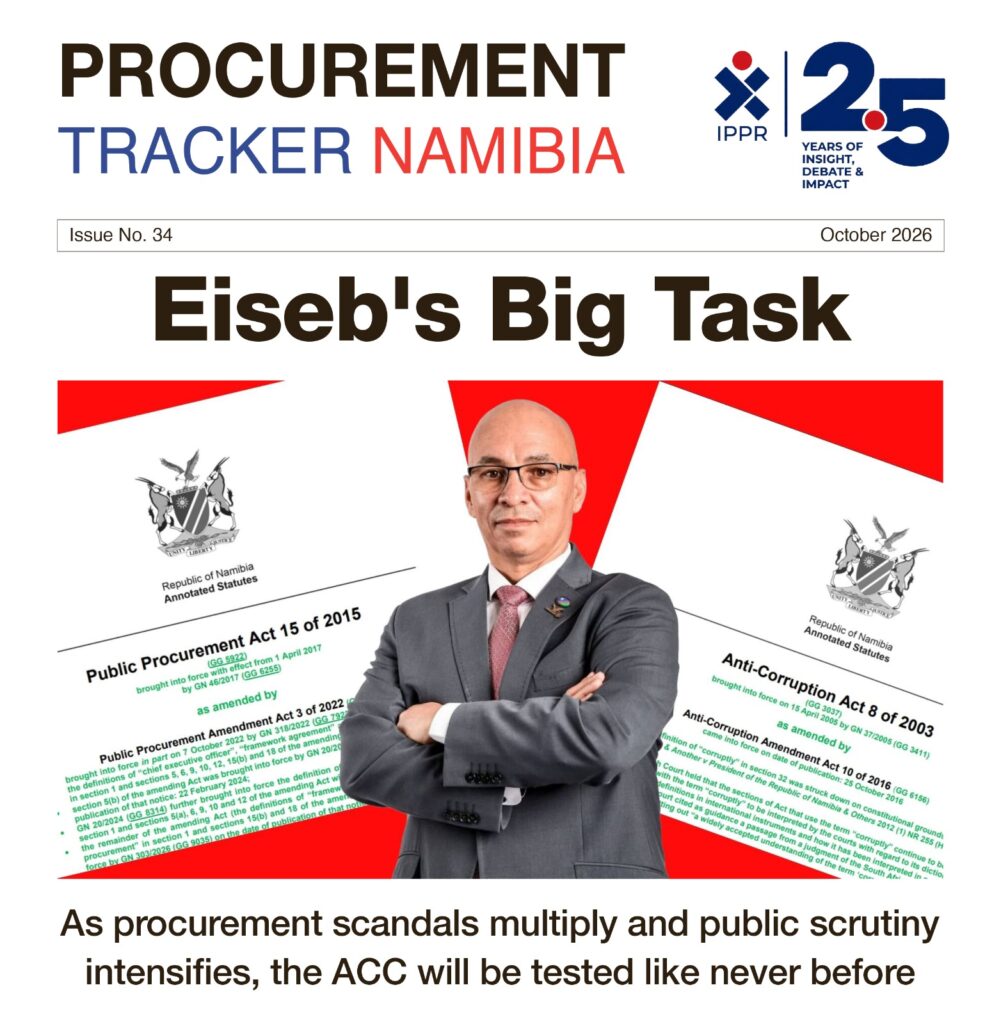
Namibia’s new Anti-Corruption Commission (ACC) Director-General, Bryan Eiseb, takes office at a critical moment, with public confidence in anti-corruption efforts under strain and procurement scandals continuing to raise serious concerns. The October 2026 edition of Procurement Tracker Namibia, titled Eiseb’s Big Task, examines the challenges facing the new ACC leadership and asks whether Eiseb can […]
Open Budget Survey: Namibia
The Open Budget Survey (OBS) 2025 assesses transparency, public participation and oversight in national budget processes across 82 countries. Namibia scores 53 out of 100 for budget transparency, 17 for public participation and 48 for oversight, highlighting continuing weaknesses in public access to budget information, opportunities for citizen engagement and parliamentary scrutiny of public finances. […]
Counting Every Dollar
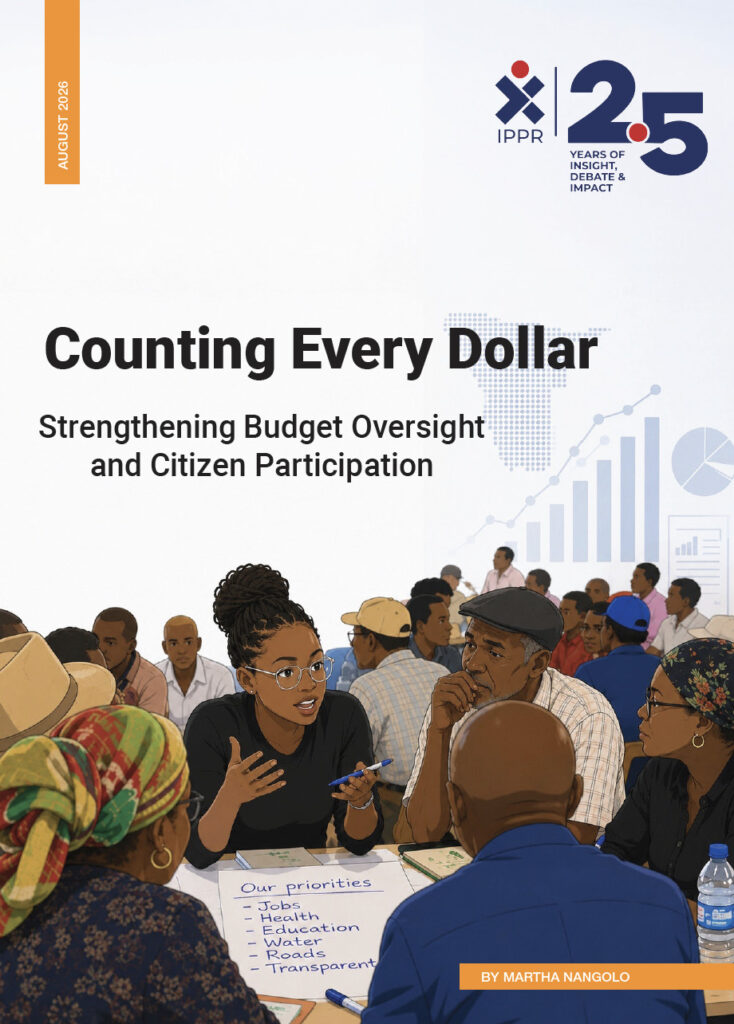
How transparent is Namibia’s national budget, and how effectively can citizens and Parliament hold government accountable for public spending? This IPPR research paper examines budget transparency, public participation and parliamentary oversight, drawing on the latest Open Budget Survey findings. While Namibia has made progress in publishing budget information, significant weaknesses remain in public participation, legislative […]
Namibia QER Quarter 3 2026
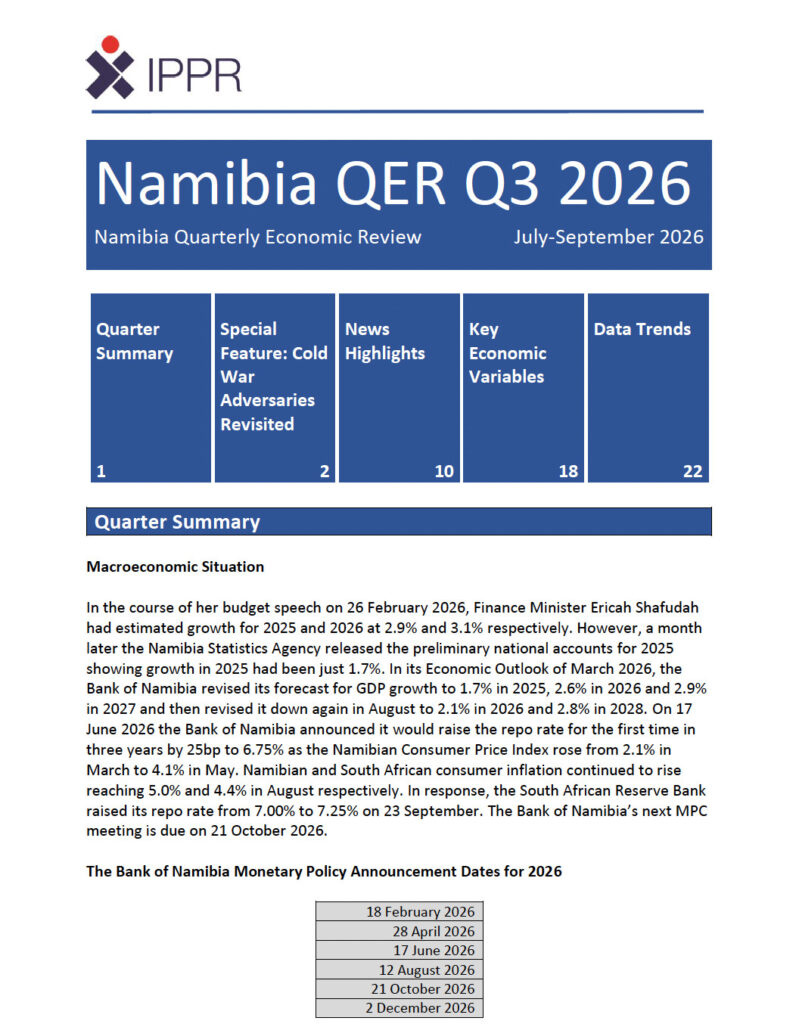
The latest edition of the Namibia Quarterly Economic Review (QER) provides an overview of key economic developments during the third quarter of 2026. This edition’s special feature examines Namibia’s economic relationships with Russia and the United States, contrasting political ties with the realities of trade, investment, tourism and other economic links. The QER also provides […]
Thresholds of Trouble
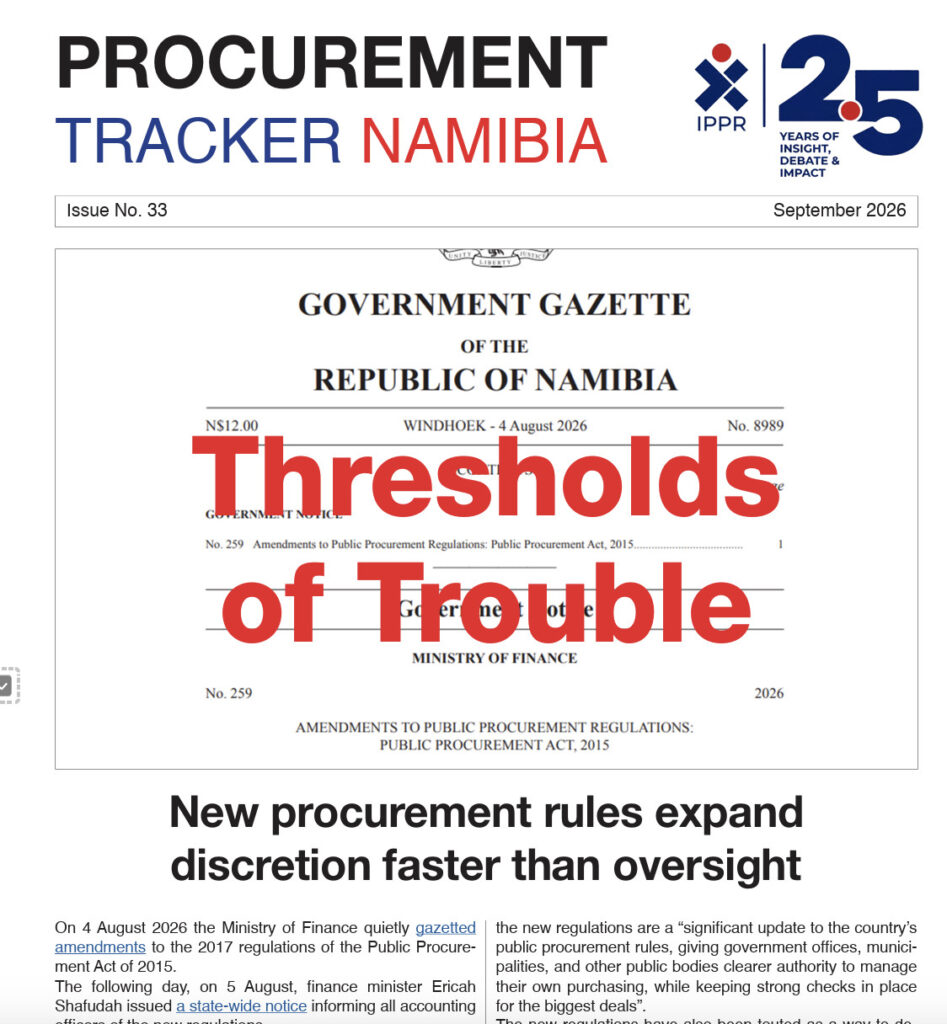
The latest edition of IPPR’s Procurement Tracker Namibia examines recent changes to Namibia’s public procurement rules and the governance risks associated with significantly higher procurement thresholds. Titled Thresholds of Trouble: New procurement rules expand discretion faster than oversight, the paper argues that greater procurement autonomy for public entities has not been matched by stronger transparency, […]
State of the Namibian Economy 2026
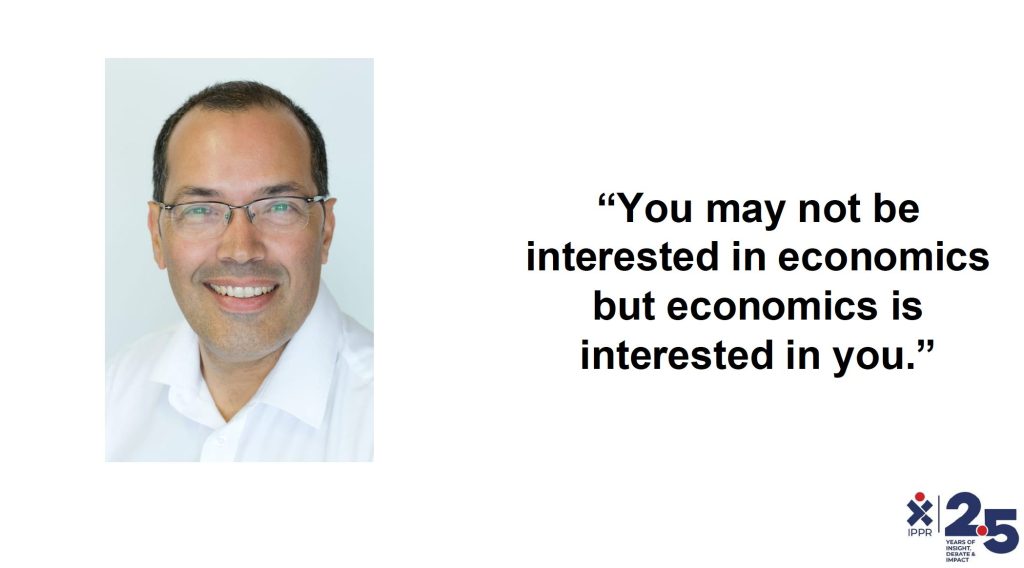
IPPR research associate Robin Sherbourne unpacked the State of the Namibian Economy in his annual presentation delivered on 28 July 2026 This comprehensive overview covered everything from oil and gas through to diamonds.
Political Scenarios To 2030
In this presentation, IPPR Executive Director Graham Hopwood develops three scenarios for Namibia’s political and governance trajectory to 2030. Rather than predicting the future, the scenarios explore plausible pathways based on current political, economic and institutional trends, with the aim of stimulating debate and identifying the reforms needed to strengthen governance, accountability and inclusive development. […]
Namibia-EU Trade Relations
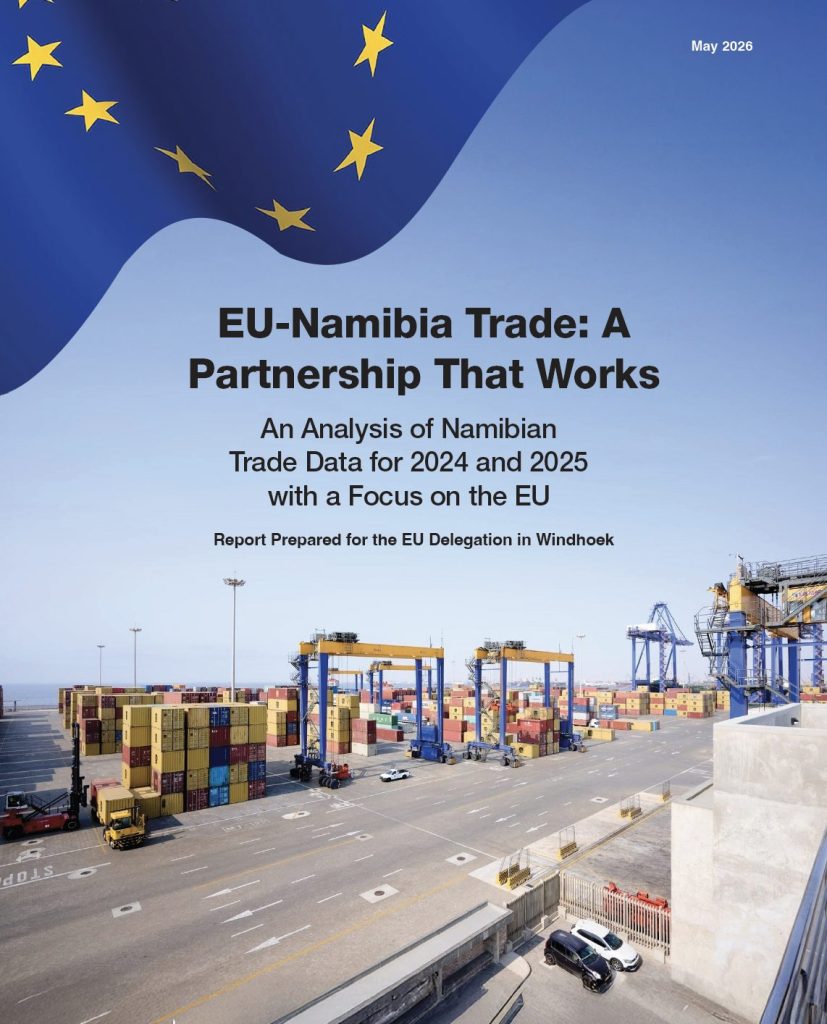
This report analyses Namibia’s trade performance in 2024 and 2025, with a particular focus on the country’s economic relationship with the European Union. Drawing on the latest Namibia Statistics Agency trade data, it examines export and import trends, the composition of trade, key trading partners and the contribution of trade with the EU to employment […]
Danger of Cybercrime Overreach
This briefing paper examines the draft Cybercrime Bill 2026 from a constitutional and human rights perspective. The paper argues that while effective cybercrime legislation is essential, several provisions in the current draft are so broadly framed that they could undermine freedom of expression, media freedom, privacy and access to information. The paper identifies key areas […]
Namibia QER Quarter 2 2026
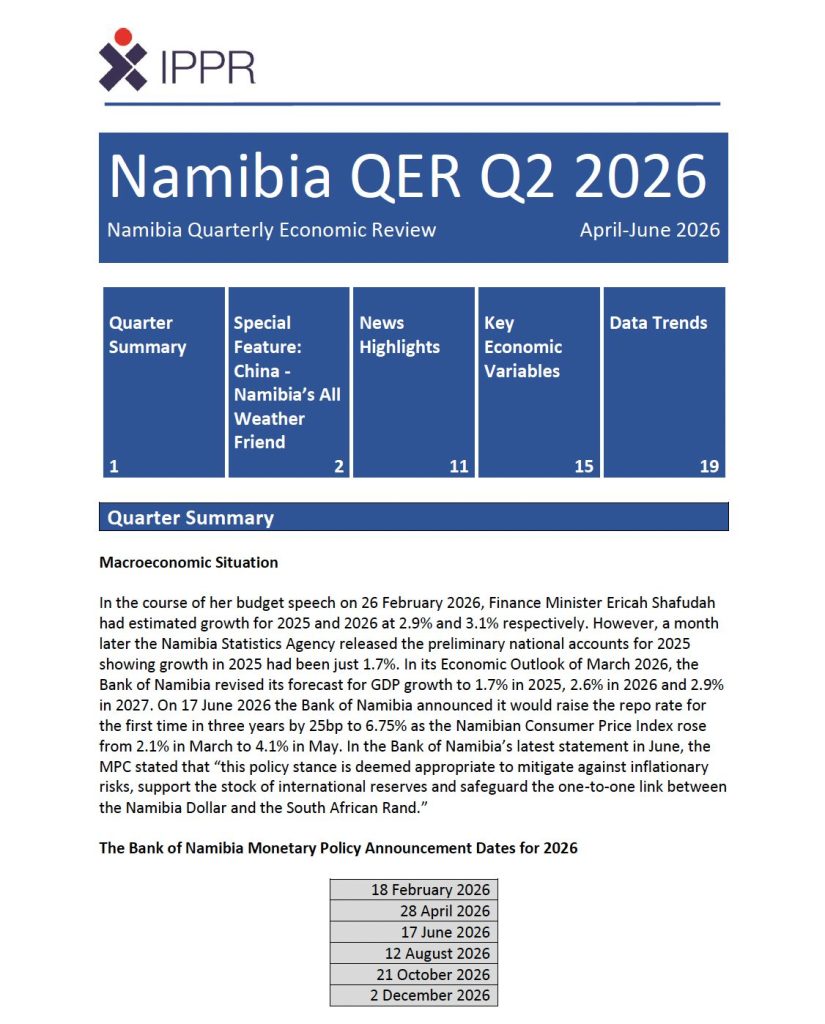
This Namibia Quarterly Economic Review (Q2 2026) reviews key economic developments from April to June 2026 and includes a special feature examining China’s expanding role in Namibia’s economy – from mining and energy to infrastructure, telecommunications and water. Download the report for analysis of the latest economic trends, policy developments and investment issues.